A networked LED advertising project is only as manageable as the system controlling it. Screens may be installed across retail stores, shopping malls, transportation hubs, building façades, showrooms, or commercial venues, but every location still needs the correct content, playback schedule, resolution, and operating status.
A suitable media control system should connect content publishing, local playback, video processing, LED control, and network communication without creating an unnecessarily complicated equipment chain. Before purchasing, buyers should review display quantity, screen resolution, content format, network conditions, synchronization requirements, control interfaces, and future expansion.
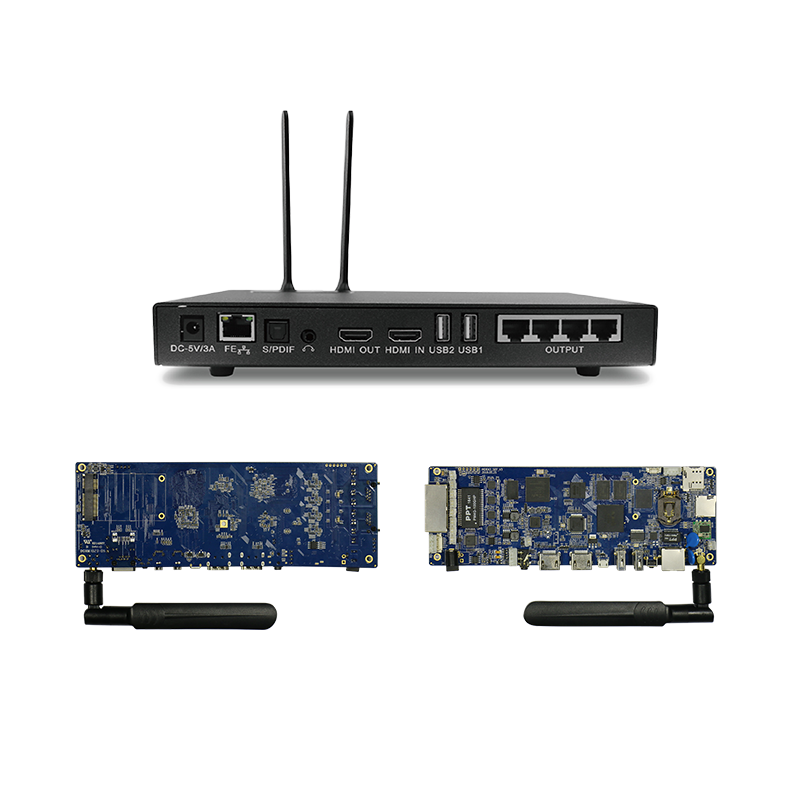
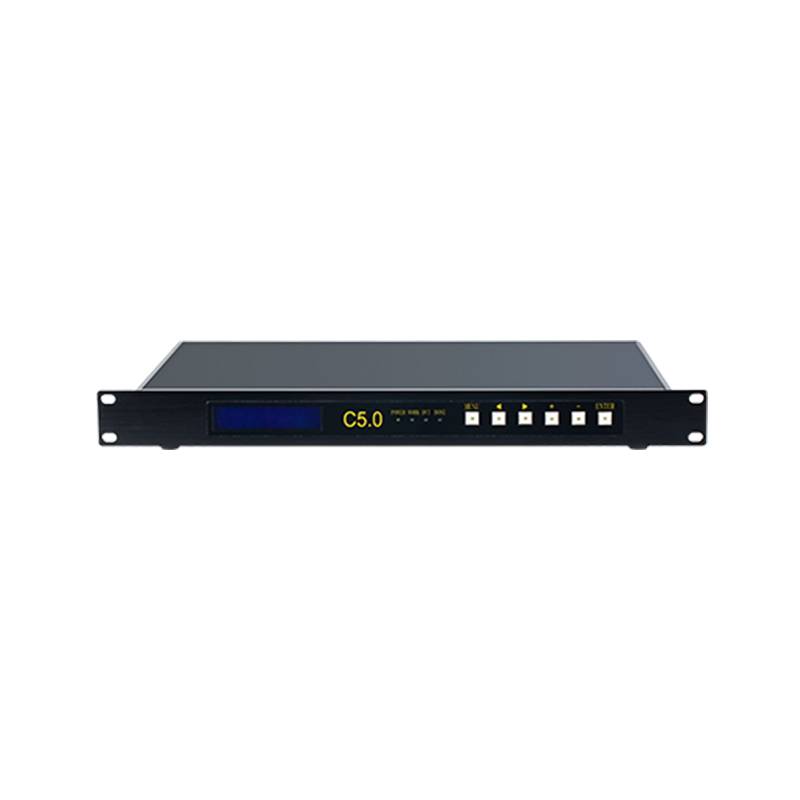
XMOZU’s MDEA system combines network publishing, media playback, video processing, and LED display control in an integrated platform for advertising and architectural display projects.
Define the Display Network Before Selecting a Media Control System
Start by mapping the complete display network rather than choosing a controller for one screen in isolation. A single advertising screen inside a store has different requirements from a network covering dozens of branches or several large LED displays in one commercial complex.
The project brief should identify:
Total number of LED displays
Screen resolution and aspect ratio
Physical location of each screen
Independent or synchronized playback
Local or centralized content publishing
Network connection available at each location
Required operating schedules
Planned future screen expansion
Buyers should also decide whether each screen will display the same campaign or require an independent playlist. A chain retailer may distribute one national promotion while allowing regional stores to insert local prices or events. A building façade project may require multiple controllers to play one coordinated visual sequence.
Defining these requirements early helps determine how many control units are needed and whether the system architecture should be centralized, distributed, or mixed.
Confirm Playback Requirements for the LED Display Control System
An LED display control system must support the actual media files used by the advertising team. Buyers should not assume that every controller can play every format, resolution, frame rate, or codec.
The MDEA family supports commonly used image, video, and audio formats. The listed MDEA2Plus and MDEA2Fast configurations support formats including BMP, JPEG, GIF, PNG, MP4, 3GP, MKV, and FLV. MDEA3 supports additional video formats and is designed for H.265-encoded 4K video playback as well as HTML5 content.
Before ordering, confirm:
| Playback factor | Integration question |
|---|
| Canvas resolution | Does the output match the LED screen’s mapped resolution? |
| Video codec | Can the controller decode the files produced by the content team? |
| Image format | Are transparent and animated formats required? |
| Audio | Does the installation include speakers or external audio equipment? |
| Scheduling | Must different playlists run by date, time, or location? |
| Live input | Is an HDMI camera, computer, or broadcast source required? |
| Offline playback | Should content continue when the internet connection fails? |
A content test using final campaign files should be completed before full deployment. This can reveal problems with scaling, playback smoothness, unsupported codecs, or incorrect screen proportions.
Check Network and Interface Compatibility
The controller must connect reliably to the network infrastructure available at the installation site. XMOZU’s MDEA system includes an RJ45 network interface, Wi-Fi connectivity, and support for an external 3G card. These connections enable network publishing and real-time synchronized playback of messages and video.
Wired Ethernet is generally preferable for permanent installations where stable cabling is available. Wi-Fi can simplify installation in retail environments, but signal strength, network congestion, password management, and firewall rules should be checked during the site survey.
Buyers should also review the physical interfaces required for commissioning and operation. Depending on the MDEA model, available connections include HDMI output, HDMI input, USB, Ethernet, and audio interfaces. MDEA3 includes HDMI 2.0 output supporting 4K at 60 Hz, while the listed MDEA2 configurations use HDMI 1.3 output at 1280 × 720 and 60 Hz.
The integration checklist should therefore include:
Available network connection
Required output resolution
HDMI input and output needs
USB device requirements
Audio output requirements
Cable distance and routing
Router and firewall access
Power recovery behavior
Plan Multi-Screen Synchronization and Remote Publishing
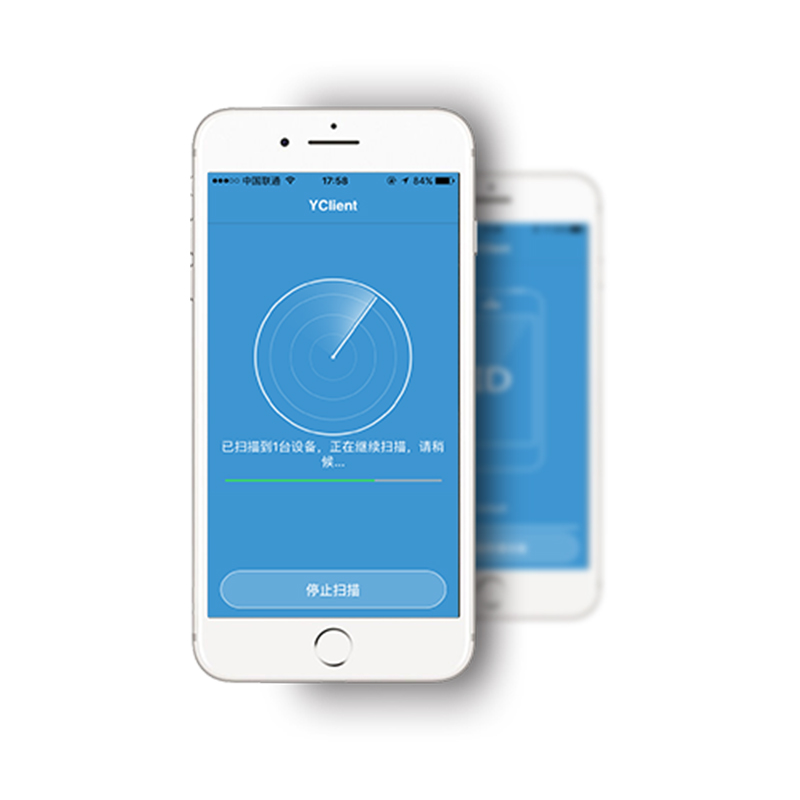
A networked advertising system should make it easy to update many screens without visiting every location. Buyers should define how administrators create, approve, schedule, publish, and verify content.
For synchronized campaigns, the system must distribute the same media and timing instructions to all assigned screens. The MDEA platform supports network-based real-time synchronized playback, making it suitable for coordinated messages and video across connected displays.
A practical publishing workflow includes:
Create content: Prepare media using the approved resolution and duration.
Review content: Check pricing, dates, language, and brand compliance.
Assign screens: Select individual displays or location groups.
Schedule playback: Set campaign start, end, and daily operating times.
Publish media: Transfer the approved files through the network.
Verify operation: Confirm that each display is online and playing correctly.
For larger projects, ask whether the platform supports screen grouping, user permissions, playback logs, device status, and remote troubleshooting. These functions reduce the risk of outdated content or unauthorized changes.
Compare Multi Media Controller Hardware Capacity
A multi media controller should be sized according to content complexity and output requirements. Selecting the highest-performance model is not always necessary, but insufficient processing or storage can limit future campaigns.
The MDEA range includes several hardware configurations:
| Model | RAM | Storage | Notable capability |
|---|
| MDEA2Plus | DDR3 1 GB | 8 GB | Integrated playback and LED control |
| MDEA2Fast | DDR3 1 GB | 8 GB flash | Integrated network publishing and playback |
| MDEA3 | Dual-channel DDR3 2 GB | 16 GB eMMC | 4K video support and Gigabit Ethernet |
MDEA3 uses an RK3288 ARM Cortex-A17 quad-core processor and supports 10/100/1000 Mbps Ethernet. The MDEA models also include built-in media-player functions, allowing the unit to perform functions that would otherwise require a separate PC host.
Buyers should select the model according to the highest expected resolution, media complexity, network load, storage demand, and expansion plan—not only the requirements of the first campaign.
Complete Security, Commissioning, and Support Checks
A multimedia control system becomes part of the buyer’s network and should be managed accordingly. Default passwords should be changed, user access should be limited, and publishing permissions should be separated from general store or venue access.
Commissioning should verify:
Correct display mapping and output resolution
Stable image and video playback
Wired and wireless network connections
Synchronized playback across assigned screens
Recovery after power or network interruption
Content scheduling and expiration
HDMI, USB, and audio interfaces
Administrator and local-user permissions
Buyers should also request wiring diagrams, configuration files, user manuals, spare units, remote-support procedures, and software-update guidance. Saving the final configuration makes replacement and future expansion much easier.
FAQ About LED Media Control Systems
What does a media control system do for an LED display?
It manages content playback, publishing, scheduling, video processing, and communication with the LED display. An integrated system can reduce the number of separate devices required.
Can one controller manage multiple LED advertising displays?
It depends on screen resolution, system architecture, and whether the displays show identical or independent content. The complete screen quantity and playback plan should be reviewed before selecting the controller.
What is the difference between synchronous and asynchronous playback?
Synchronous playback follows a real-time input or coordinated signal. Asynchronous playback uses content stored on the controller and can continue without a continuously connected source computer.
Can MDEA controllers publish content through Wi-Fi?
Yes. The MDEA system supports Wi-Fi and RJ45 network connections for content publishing and synchronized playback.
Which MDEA model is suitable for 4K content?
MDEA3 is the listed model supporting H.265-encoded 4K video and HDMI 2.0 output at up to 4K and 60 Hz.
Conclusion
Selecting a media control system for networked LED advertising requires a coordinated review of display quantity, resolution, media formats, networking, synchronization, interfaces, hardware performance, and user management.
XMOZU’s MDEA system integrates network publishing, media playback, video processing, and LED control in one platform. By providing the screen specifications, content requirements, installation locations, and network architecture, buyers can select an appropriate MDEA configuration and build a more manageable multi-screen advertising network.